
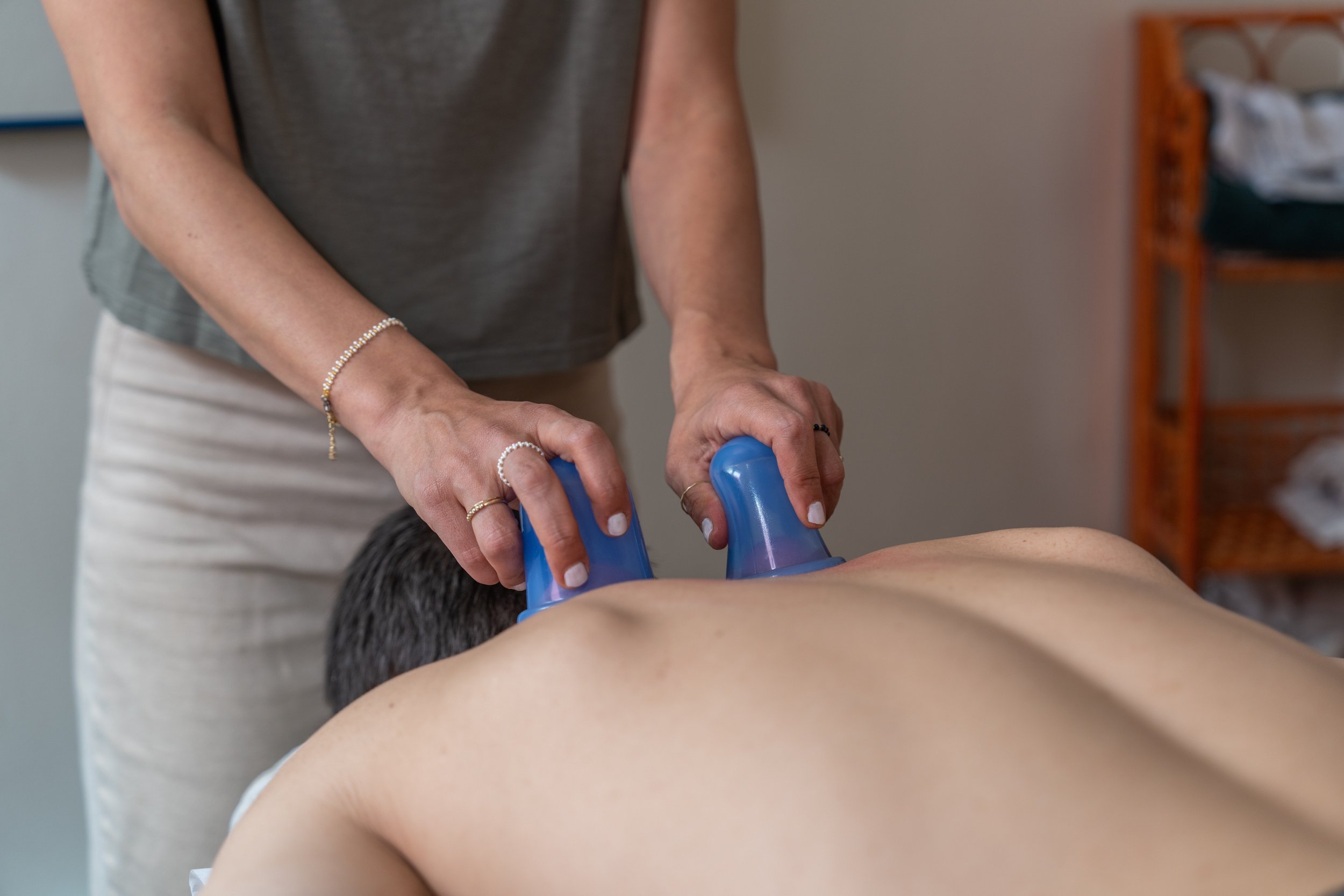
Cupping
What is Cupping?
Cupping therapy involves placing special cups on the skin to create suction, which helps to stimulate circulation, release muscle tension, and draw out stagnation from the body's tissues. At Felek Acupuncture, cupping is often used alongside acupuncture.
There are several types of cupping, but the most common method involves using glass, silicone, or plastic cups. In fire cupping (a traditional method), a flame is briefly placed inside a glass cup to create a vacuum, then the cup is quickly applied to the skin. In modern clinics, pump cups or silicone cups may be used to achieve similar suction without fire. The cups are typically left in place for 5–15 minutes or moved along the skin in a technique called "gliding cupping" — a type of massage that feels deeply relaxing and detoxifying.
Cupping helps loosen tight muscles, reduce inflammation, improve blood flow, and activate the lymphatic system. It's especially beneficial for muscle pain, tension headaches, back pain, respiratory conditions like colds or asthma, and stress relief. In TCM, it’s often used to release “wind” or “cold” pathogens, clear stagnation, and invigorate qi and blood.
Are there any side effects of cupping?
After a cupping session, it’s common to see circular marks or bruises on the skin where the cups were placed — these are not painful and usually fade within a few days. The marks are often seen as a sign that stagnation has been released from deeper layers of the body.
Post-Cupping Care Tips
-
After cupping, your pores are more open and your body is a bit more vulnerable to wind and cold. It’s best to cover the cupped areas (usually your back or shoulders) and avoid drafts, fans, or direct exposure to cold for the next 24 hours.
-
Cupping promotes circulation and can encourage your body to release toxins or metabolic waste through the lymphatic system. Drinking plenty of water helps your body flush out anything that's been stirred up and supports the detoxification process.
-
Some people feel energized after cupping, while others feel very relaxed or even a little tired. Give yourself permission to rest and let your body integrate the effects of the treatment. Avoid heavy workouts or intense exertion for the rest of the day.
-
Since cupping can support detoxification, it’s a good idea to avoid substances that tax the liver or dehydrate the body — at least for the rest of the day.
-
Those round, red or purple marks are not bruises in the traditional sense — they’re more like hickeys from the suction, and they indicate areas of stagnation being released. They usually fade within a few days, and the color can give your practitioner useful information about what’s happening internally.